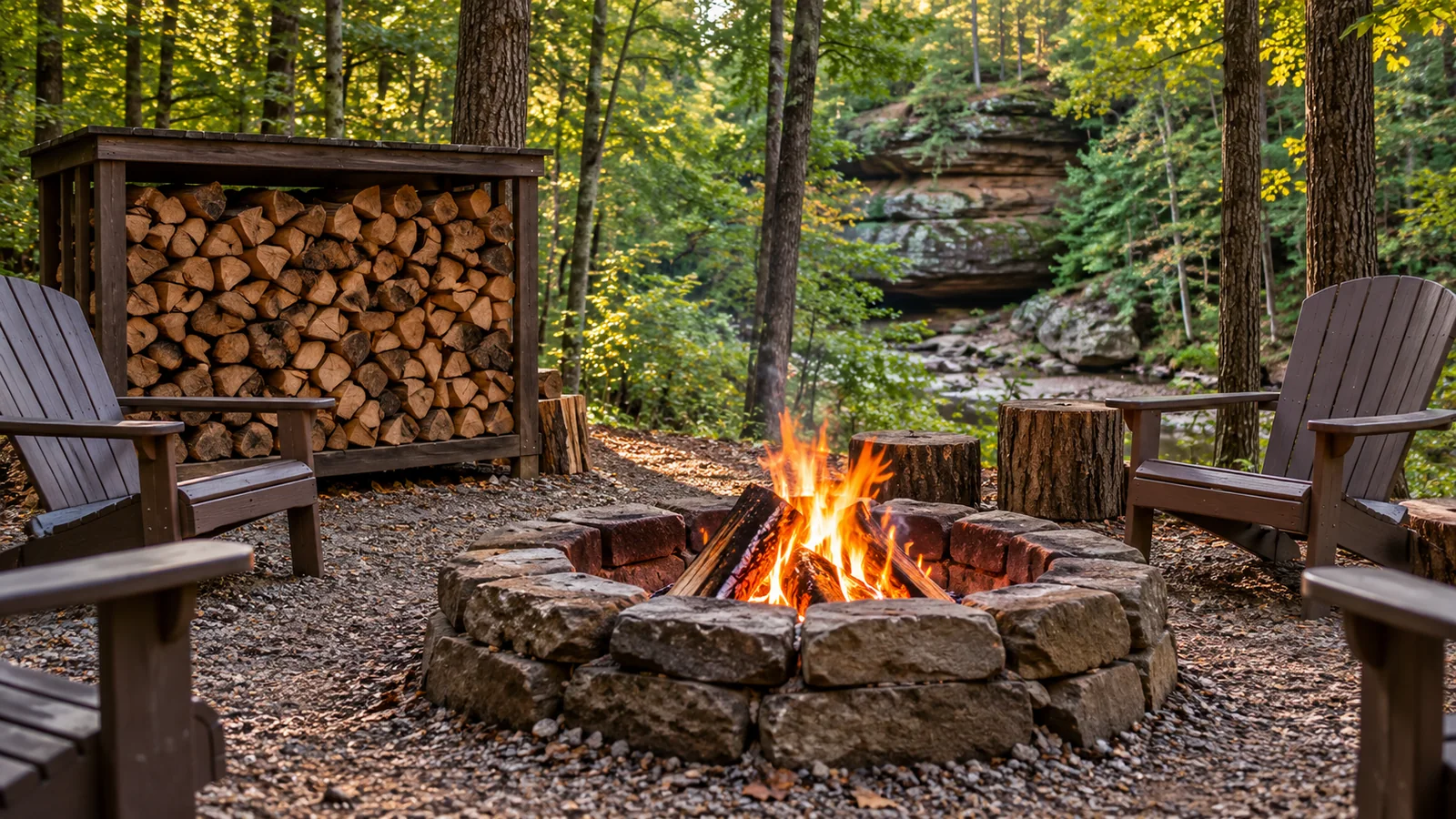
The No-Surprise Firewood Restock System for Cabin Owners and Property Managers
A firewood amenity should not depend on whether someone happened to notice the rack was empty. Build a measurable par level, a turnover photo, and a supplier trigger so the next guest starts fully stocked.
Quick answer
Stop restocking by memory or calendar. Define the guest-ready amount, maintain a reserve, have the turnover team photograph inventory after each stay, and trigger replenishment before the property falls below a specific minimum.
The goal is boring reliability
A perfect firewood program is almost invisible. The guest sees a clean, dry, clearly labeled supply. The cleaner never gets an emergency text. The property manager does not drive across the county on a Friday night. The supplier receives predictable replenishment requests rather than panicked same-day calls.
That outcome comes from a small inventory system, not from owning a huge pile of wood.
Why calendar-based restocking fails
Two reservations can consume wildly different amounts. A summer couple may never light the ring. A rainy autumn group may run a fire for six hours each night. A three-night holiday stay can burn more than several ordinary turnovers combined.
Restocking “every two weeks” ignores the variable that matters: remaining inventory.
Define three inventory levels
| Level | Meaning | Action |
|---|---|---|
| Guest-ready level | What should be available at every check-in | Must be restored before arrival |
| Restock trigger | Point where inventory is still adequate but below target | Schedule supplier replenishment |
| Emergency floor | Minimum reserve for unexpected heavy use or delay | Do not consume except to protect next stay |
Make the turnover photo the source of truth
Ask the cleaner or maintenance person to take the same photo from the same angle after every checkout. The frame should show the guest rack and, if practical, the reserve indicator.
That one habit creates a lightweight visual inventory record. A remote manager can compare this week's photo with last week's without asking someone to count individual logs.
Use a simple restock trigger
The trigger should be binary: if the rack is below the mark, create a delivery request. If the reserve is below its mark, replenish both. Avoid phrases such as “looks low” or “probably enough.”
If the property uses totes or bundles, define the trigger by units. If it uses a fixed rack, mark the height. If the station is unusual, store a reference photo in the turnover checklist.
Separate guest stock, reserve stock, and indoor-only stock
One physical pile is easy until it is not. If the indoor fireplace requires smaller or host-approved wood, keep that supply separate. If the property promises an included guest rack but also keeps emergency reserve stock, separate those too.
This prevents a large group from unknowingly consuming the wood intended for the next stay and makes the turnover photo much easier to interpret.
Seasonal par levels
| Period | Expected pattern | Operational adjustment |
|---|---|---|
| Summer | Outdoor fires may be occasional and weather-dependent | Moderate guest par; monitor rain exposure |
| Peak fall | High occupancy plus cool evenings | Raise guest and reserve levels; schedule earlier |
| Holiday / winter | Longer indoor use where wood-burning fireplaces are offered | Separate indoor inventory and increase reserve |
| Spring shoulder | Variable temperatures and wet conditions | Emphasize covered storage and flexible restock |
Supplier communication should be templated
A restock request should not require a fresh explanation every time. Keep a property profile with the service address, cabin name, approved delivery point, access notes, target quantity, contact person, and any gate procedure.
Then the recurring request can be as simple as: “Property Pine Ridge is below par. Refill guest rack to level B and reserve to level A before Friday 3 p.m.”
Templates reduce wrong-cabin and wrong-quantity errors.
Portfolio managers need property IDs
If you manage several rentals, names like “The Lodge,” “Cabin 2,” and “Pine View” are not enough. Give each property a stable internal ID and include it in delivery requests. Store a delivery photo with that ID.
This matters most when multiple cabins share one road or when marketing names change faster than addresses.
Track three numbers and ignore the rest at first
You do not need enterprise inventory software. Track deliveries, emergency restocks, and guest complaints or messages about firewood. Those three metrics tell you whether the par level is working.
If emergency restocks are frequent, raise the threshold or reserve. If leftover inventory is consistently excessive at the end of the season, lower the par level. If guests keep asking whether wood is included, improve the listing and signage rather than ordering more wood.
Included amenity versus paid add-on
Owners often debate whether firewood should be free, sold by the bundle, or offered as an upsell. The operations system works under any model. What changes is the guest communication and how you separate paid inventory from included inventory.
If it is included, define the amount. If it is paid, make purchasing simple. If the property prohibits outside wood indoors, make that explicit before arrival.
Emergency restock protocol
Even a good system can fail after a weather event, unusually heavy use, or a missed turnover. Define the emergency path in advance: who notices, who approves a delivery, which supplier is contacted, and where an unattended drop is allowed.
The emergency protocol should be shorter than the normal process, not improvised from scratch.
A simple spreadsheet schema
| Column | Example |
|---|---|
| Property ID | HH-07 |
| Property name | Hemlock Ridge |
| Guest-ready target | Rack to marked line B |
| Reserve target | Two containers |
| Last inspection | 2026-10-09 |
| Photo link | Turnover folder |
| Restock needed | Yes / No |
| Supplier request date | 2026-10-09 |
| Completed | 2026-10-10 |
| Notes | Indoor rack also low |
The operational payoff
Firewood is a tiny line item compared with lodging revenue, which is exactly why it should not absorb disproportionate management time. A clear par level and restock trigger turns it back into a small amenity.
The property feels more prepared to the guest, the cleaner has one less judgment call, and the manager stops treating an empty rack as a surprise.
What good operations look like to the guest
The guest should not see the inventory system. They should see a clean rack, clear instructions, dry wood, and an easy way to obtain more. Behind that simple experience can be a turnover photo, a supplier trigger, a reserve level, and a spreadsheet. The operational machinery exists so the amenity feels effortless.
That distinction matters for reviews. Guests rarely praise an inventory process, but they absolutely notice when a listed amenity is empty, wet, confusing, or unavailable. A few minutes of repeatable turnover work protects an experience the property has already advertised.
Create a service-level expectation with the supplier
A recurring firewood relationship works better when both sides know the expected lead time, normal delivery window, completion proof, and procedure for access problems. You do not need a formal contract for a small operation, but you do need shared expectations.
For example: normal restocks requested by noon Wednesday are completed before Friday check-in; urgent requests are handled only when capacity allows; every unattended delivery gets a photo; unclear access triggers a call rather than a guess.
Weather needs a separate contingency
Heavy rain can make a normal storage point unsuitable. Snow or ice can make a driveway unsafe for the usual delivery vehicle. Build one alternate host-approved drop point into the property profile. If the normal rack cannot be reached safely, the supplier should already know where the backup location is.
Do not require a driver to attempt a steep or icy private road simply because that is where the rack normally sits.
Control cost by measuring emergencies, not by starving the rack
Owners sometimes reduce inventory to avoid “giving away too much wood,” then spend more money and time on emergency restocks. Track the total cost of the amenity: wood, delivery, staff time, guest credits, and management interruptions. A slightly larger par level can be cheaper if it eliminates urgent trips.
Conversely, if large amounts remain untouched across a season, lower the target. The point of measurement is to replace opinions with actual use.
Standardize property profiles across a portfolio
Each rental should have one permanent supplier record: property ID, marketing name, street address, map pin, approved route, normal drop point, alternate drop point, guest-ready target, reserve target, indoor-fireplace requirements, and manager contact. Update the record only when something changes.
That profile is more valuable than repeating directions in every text message.
Audit the system before peak fall weekends
In late summer, inspect racks, roofs, fasteners, signage, lighting, and access. Confirm that the supplier still has the correct property data. Revisit seasonal par levels. A system that worked in April can fail under October occupancy if nobody increased reserve stock.
Perform the same audit before holiday and winter periods for properties with guest-use wood-burning fireplaces.
Close the loop after an exception
Every emergency is information. If a rack emptied unexpectedly, decide whether the par level was wrong, the turnover check was missed, or guests consumed reserve stock. If a delivery went to the wrong cabin, fix the property profile. If wood repeatedly arrives wet, address storage or supplier quality.
The point is not to blame the person involved. The point is to make the same exception less likely next weekend.
Make firewood visible in owner reporting without making it a major project
A monthly owner report can include a single line: normal restocks, emergency restocks, and any guest issue. That is enough to show whether the amenity is operating cleanly. If emergencies remain at zero and guest complaints are absent, the system is doing its job.
Only add more detailed tracking if the data will change a decision. The goal is reliable operations, not perfect inventory accounting for a low-cost amenity.
Define the property, target stock level, delivery point and restock trigger once. Then use the same process every turnover.
Monthly review for a multi-cabin portfolio
Once a month during active fire season, scan the delivery log by property. Look for emergency orders, repeated overstock, access problems, and guest questions. One cabin may need a larger outdoor par because its fire ring is the centerpiece of the property. Another may need less because guests rarely use it. Standardize the process, not necessarily the quantity.
Supplier scorecard
| Metric | What good looks like |
|---|---|
| Delivery accuracy | Right property, right drop point, right quantity |
| Lead time | Predictable enough for turnover scheduling |
| Completion proof | Photo or confirmation available |
| Wood condition | Dry, clean, appropriate for stated use |
| Exception handling | Calls instead of guessing when access is unclear |
Firewood trip-planning glossary
| Term | Plain-English meaning for a cabin guest |
|---|---|
| Seasoned firewood | Wood that has been dried for burning rather than freshly cut green wood. |
| Kindling | Small dry material used to establish the first flame before larger splits are added. |
| Split | A piece of firewood that has been divided from a larger round. |
| Firebox | The chamber inside a fireplace or stove where fuel burns. |
| Damper | A control in some fireplaces that affects the exhaust path and draft. |
| Par level | For owners, the target inventory level to have ready for the next guest. |
One final check before travel day
Read the host's most recent arrival message rather than relying on the listing you booked months earlier. Property rules, access instructions, available amenities, and seasonal conditions can change. If the fire is important to the weekend, confirm it the same way you confirm the door code: close enough to the trip that the answer is current.
Frequently asked questions
How often should firewood inventory be checked?
At every turnover when the property markets a wood-burning amenity, plus after known heavy-use or weather events.
What is a par level?
A target inventory amount the property aims to have ready before the next guest arrives.
Why keep reserve stock?
It absorbs unusually heavy use, weather delays, and missed deliveries without leaving the next guest empty.
What should the cleaner record?
At minimum: a photo of the rack, whether the supply is dry and orderly, and whether it is below the defined restock threshold.
Do I need inventory software?
Not necessarily. A turnover photo, a simple spreadsheet, and a clear supplier trigger can manage a small portfolio effectively.
Information reviewed September 26, 2026. Property rules, weather conditions, business availability, and pest-quarantine boundaries can change. For legal firewood-movement questions, use current Ohio Department of Agriculture and Ohio Administrative Code sources.